Natasha Tracy's Newsletter January 2025 Edition Happy New Year to My Bipolar Warriors and Supporters!
As we step into a new year, I want to take a moment to acknowledge the strength and resilience you’ve carried through 2024. January can be a time of fresh starts and reflection, but it can also bring challenges,
especially when living with a mental illness. Let’s start tackling this year together, one inch at a time.
In this edition, you'll find: - 📖 Book sneak peek #2 about how to advocate for your health even when things are difficult
- ✍️ Writings to inspire you along your bipolar journey
- ☁️ I've joined Bluesky, and I hope to see you there
- 🤔
Reflections on "labelphobia"
- ✨ January and aging reflections
Let's dive in! |
Bipolar Rule: You must advocate for your health needs. This rule dives into the challenges of advocating for your health when living with bipolar disorder — and how to overcome them. Learn practical strategies to navigate stigma, communicate effectively with doctors, and take control of your care. Your health deserves your advocacy — start here. Here’s a short preview: “People with bipolar disorder are often assumed to be lying or making things up. They are often assumed to be drug-seeking. They may also be assumed to be attention-seeking or hypochondriacal. In other words, the second you sit in front of a doctor as a person with bipolar disorder, they may be inclined not to believe a word coming out of your
mouth. The doctor may treat you like you’re “crazy,” whether they know they are doing it or not. Your self-advocacy may be seen as an annoyance. "But let’s say you get past that problem, and the doctor believes you when you talk about your health concerns. That’s great, right? Well, it might be. But then again, you might run into the second big problem: Doctors who blame every concern on bipolar disorder.”
Read the full excerpt here. While you're there, make sure to sign up for the Bipolar Rules! mailing list. It's exclusive to the book, and being on it will enter you to win your very own autographed copy! I'm so honored to have all of you with me on my journey to get this new work out. For those of you keeping score, the draft is about 175 pages long, with pages added every day. More about how things are going next month. Your Bipolar Toolbox: Practical Insights and Advice for the New Year Here are a few things to ponder between resolutions: - Best Mental Health Charities to Donate To — Looking for a meaningful way to make an impact? Explore my guide to top-rated mental health charities supporting serious mental illness. From NAMI to the Trevor Project, these organizations are highly rated for their effectiveness and transparency. Learn how your contribution can create real change in the lives of those who need it
most.
- The Hidden Truth About New Year’s and Suicide — Finding Hope and Healing in January — For many, New Year’s Day feels less like a fresh start and more like a heavy burden. Learn why this time can be especially challenging for one's mental health, how to navigate the pressures, and what you
can do to find hope and healing — any day of the year. Read more and take the next step toward brighter days.
- Bipolar Disorder Is Not a Superpower, and Famous People Shouldn't Say That It Is — Is bipolar disorder a "superpower?" For some, like celebrity chef Heston Blumenthal, the answer
may be yes. But what about the rest of us? In this thought-provoking article, I explore the challenges, misconceptions, and harm caused by romanticizing bipolar disorder as a gift. Let’s talk about the real impact of bipolar disorder and why we need to shift the conversation to advocate for those most affected.
The Archives I'm Now on BlueSky! I'm trying to get away from Twitter for a whole host of reasons, and yes, I'm late to the party in doing it. Now, you'll find me on other social media platforms like Bluesky. So, I really need your support. Please come and follow me here: |
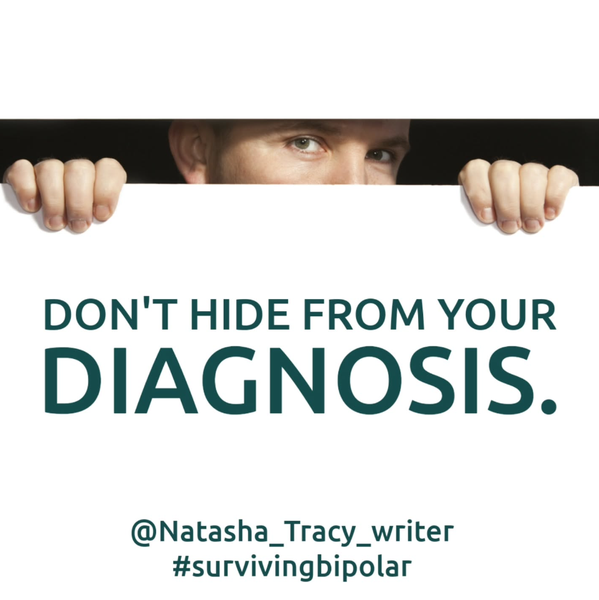
Don't Hide from Your Diagnosis December 16, 2024 "Years ago, I coined the term "labelphobia." It's the fear some people have about getting a diagnosis, i.e., a "label." Some people avoid
getting a diagnosis or admitting to their diagnosis because they feel they are deleterious labels.
"But this ignores the fact that diagnoses are an incredibly important part of getting and staying well.
"First off, you need a formal diagnosis to understand what you are fighting. You cannot fight an enemy you don't understand.
"But also, diagnoses are critical for medical communication. Saying to a doctor that you have bipolar II allows you to quickly communicate important
medical information and part of what you experience as a patient. Doctors need to know this to treat though effectively.
"While many people initially find diagnoses scary, in the end, they become empowering. They explain so much, and they allow you to take better control of your life and symptoms.
"If you'd like to read more about labelphobia, see here: https://l.natashatracy.com/labelphobia"
January's Final Words As for me, January 27th is my birthday. If you count the rings, you'll see I'm
turning 47. It feels very aged, indeed. That said, I'm aware of all the wisdom I've gained in the last year and all I hope to gain in the next. The wrinkles are worth it. “What is it about the January feeling— past everything else, low-glowing hunger that propels me around.”
— Eileen
Myles
Your Thoughts Matter Let me know what resonated most or what you'd like to see in future editions. Reply to this email or
connect with me on social media. |
You're receiving this email because you've agreed to communications from Bipolar Burble or you signed up for a Natasha Tracy masterclass. Your information will never be given, rented or sold to anyone.
|
|
|
|